
What Size Solar Panel Do You Need for a Portable Power Station?
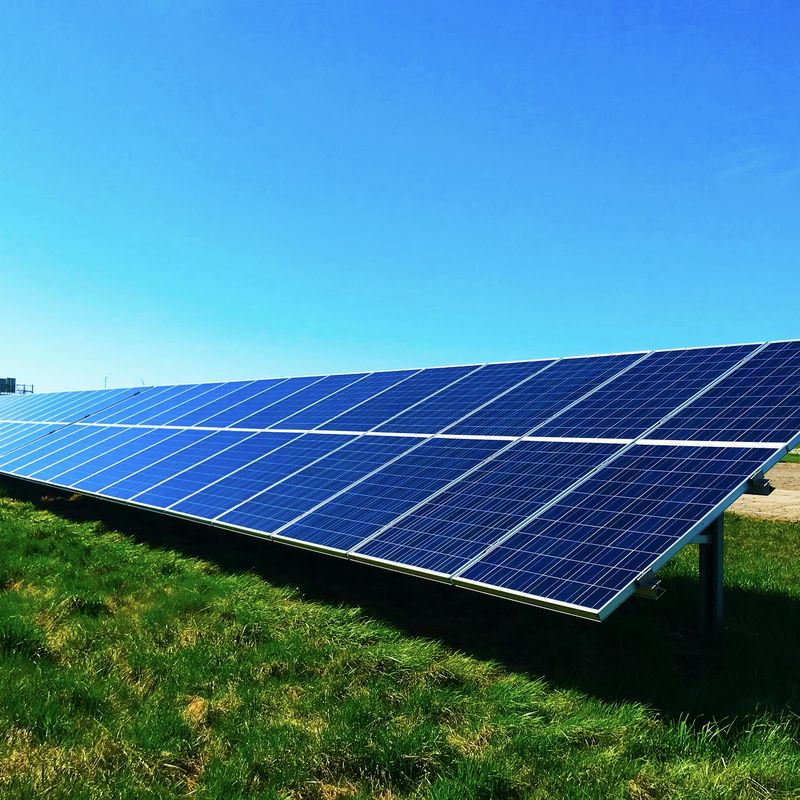
Short answer: work out how much energy you use in a day in watt-hours (Wh), then size the panels to put that back in the sun hours you actually get. A quick rule: daily solar energy ≈ panel watts × peak sun hours × 0.7. So a 200-watt panel in a spot with 4 peak sun hours puts roughly 560 Wh a day into a power station. Then check that your station can take that many watts and volts on its solar input. Extra panels beyond its limit add nothing.
Step 1: Know the three numbers
- Battery capacity (Wh): printed on every power station. It is the size of the tank you are filling.
- Panel rating (W): what the panel makes in lab conditions: 1,000 watts of sunlight per square meter at a cell temperature of 25 °C. Outdoors you almost always get less.
- Peak sun hours: the day’s sunlight squeezed into “full-strength” hours. One peak sun hour is 1 kWh of sunlight per square meter. Most places get far fewer peak sun hours than daylight hours, and far fewer in winter.
Sunlight varies a lot by place and season. The U.S. Energy Information Administration notes that latitude, climate and weather are the main factors, that lower latitudes and dry climates get the most, and that clouds, dust and pollution cut it. Here is what the free PVWatts calculator (from the National Laboratory of the Rockies, formerly NREL) gives as long-term averages for a fixed, south-facing panel tilted to the latitude angle:
| City | Darkest month (avg) | Brightest month (avg) | Year-round average |
|---|---|---|---|
| Phoenix | 5.4 (Dec) | 7.5 (Apr) | 6.6 |
| Los Angeles | 4.6 (Dec) | 7.2 (Aug) | 6.1 |
| Miami | 4.7 (Dec) | 6.4 (Mar) | 5.6 |
| New York | 3.0 (Dec) | 5.5 (Jul) | 4.6 |
| Chicago | 2.7 (Dec) | 5.9 (Jul) | 4.5 |
| Seattle | 1.7 (Dec) | 5.5 (Aug) | 3.7 |
These are monthly averages: a cloudy day can be far lower, and a panel lying flat gets less than one tilted toward the sun, especially in winter. Look up your own location in PVWatts for your numbers.
Step 2: Why multiply by 0.7?
A panel’s label is a best case. Real output is lower because of heat (hot panels make less power), dust, the angle to the sun, wiring, and the station’s own charging losses. The PVWatts calculator assumes 14% system losses by default, and that is for a fixed, well-aimed rooftop system. A portable panel propped on the ground, aimed by hand and moved around usually does worse. That is why this guide plans with 70% of the label. It’s a cautious planning number, not a promise: in strong, cool sunlight with the panel aimed well, you may see more.
Solar recharge calculator
Enter your numbers. The calculator caps the panel watts at your station’s maximum solar input.
| Power station capacity, Wh | |
| Total panel watts | |
| Station’s max solar input, W (from its spec sheet) | |
| Peak sun hours per day | |
| Real-world factor, % |
–
Worked example: a 1,000 Wh station with one 200 W panel and 4 peak sun hours gets about 560 Wh a day, so a full recharge from empty takes about two days of that sun. Double the panels to 400 W and it gets about 1,120 Wh a day, enough to refill it in roughly one good day.
Step 3: Size for how you’ll use it
| Goal | How to size the panels |
|---|---|
| Top up while camping | Panels that replace what you use each day. Add up your daily Wh (lights, phones, a fridge) and divide by peak sun hours × 0.7. |
| Refill from empty in one day | Capacity ÷ (peak sun hours × 0.7). For 1,000 Wh at 4 sun hours, that is about 360 W of panels. |
| Power outage backup | Plan for bad weather: use your darkest month’s sun hours (see the table), not summer ones, and remember cloudy days fall below even that. Recharging every day may need several panels or a second way to charge (wall, car or generator). |
| Just a trickle for small gear | A single small panel is enough to keep phones and lights going, but it won’t refill a large station quickly. |
Step 4: Check the station’s solar input limits
Every power station lists its solar input on the spec sheet. Before you buy panels, check these against them:
- Maximum solar watts: the most it will take. Panels above this don’t charge it faster, though a little extra helps on hazy days.
- Voltage range: the input works only between a minimum and a maximum voltage. Panels wired in series add their voltages, so add up each panel’s open-circuit voltage (Voc) and stay below the station’s maximum. Voltage rises in cold weather, so leave some margin.
- Maximum current (amps): panels wired in parallel add their current instead. Stay within the station’s amp limit.
- Connector: panels and stations don’t always use the same plug. You may need an adapter cable.
- Two inputs: some larger stations have two solar inputs, each with its own limits, which lets you add more panels.
Portable vs rigid panels
- Folding portable panels pack small and have a kickstand, so they’re easy to aim. Best for camping, RVs and setting out during an outage.
- Rigid panels are heavier and bulkier but sturdier, and suit a permanent mount on a roof, shed or van.
- Look for a weather-resistance rating if a panel will stay outside, and check its weight if you’ll carry it.
Get more out of the sun you have
- Point the panel straight at the sun and tilt it up. Re-aim it two or three times a day.
- Avoid shade. Even a shadow across part of a panel can cut its output sharply.
- Keep it cool: let air flow behind it, and don’t lay it on hot pavement.
- Don’t charge through a window. Glass cuts the output.
- Keep the panel clean, and keep the power station itself out of direct sun.
Quick checklist before you buy
- Your station’s capacity (Wh) and how much you use a day
- Peak sun hours where and when you’ll use it (plan with the worst season you care about)
- Panel watts from: Wh needed ÷ (sun hours × 0.7)
- Within the station’s max solar watts, voltage range and amps
- The right connector or adapter cable
- Folding or rigid, weight, and weather rating
Shop solar panels and power stations on Amazon
Check each panel’s watts, open-circuit voltage and connector against your station’s solar input limits.
Keep reading
Still choosing the station itself? Read what size power station you need, or compare with a fuel generator in inverter vs conventional generator. Or browse solar kits.
Sources read October 18, 2026: U.S. Energy Information Administration, “Solar explained: Where solar is found and used”; PVWatts Calculator, National Laboratory of the Rockies (default 14% system losses, and the monthly sun-hour averages in the table, from its version 8 data for each city).
Disclosure: As an Amazon Associate we earn from qualifying purchases. We also earn commissions from eBay and other retailers' affiliate links. Shop links on this page are affiliate links and are marked sponsored.