
Inverter vs Conventional Generator: Which Should You Buy?
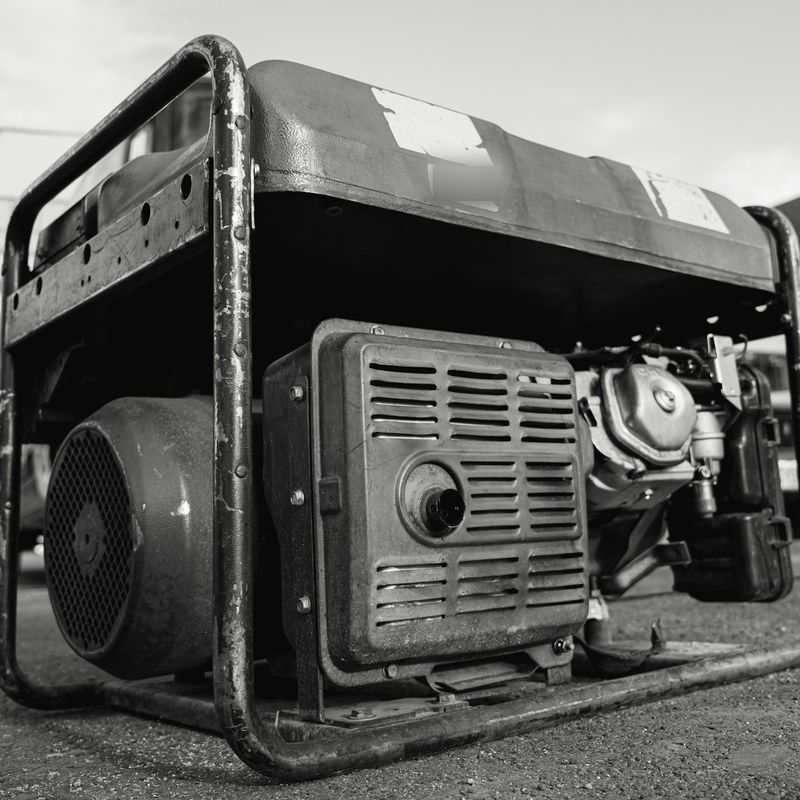
Short answer: buy an inverter generator to run electronics, go camping or tailgating, or anywhere noise matters. It is quieter, uses less fuel at light loads and makes cleaner power. Buy a conventional (open-frame) generator to power more of the house in an outage for less money per watt, where noise and weight matter less. Either way, the safety rules at the end of this guide are not optional.
How the two types work
- Conventional generator: the engine turns the alternator directly. To make 60 Hz household power, the engine has to spin at a constant speed (typically 3,600 rpm) whatever the load. That makes it loud and thirsty at light loads, but simple and strong.
- Inverter generator: the alternator makes raw power, electronics turn it into DC, and an inverter rebuilds smooth AC. The output frequency no longer depends on engine speed, so the engine can slow down when you need less power (often called eco mode). The result is less noise, less fuel and a steadier waveform.
Side-by-side
| Inverter generator | Conventional generator | |
|---|---|---|
| Power quality | Steady, clean sine wave; safer for laptops, TVs, routers and appliances with control boards | Fine for tools, lights and motors. Quality varies, so check the THD figure before running sensitive electronics |
| Noise | Quieter, especially at light load (engine slows down) | Louder; engine runs at full speed all the time |
| Fuel use | Lower at light and medium loads | Higher at light loads; similar near full load |
| Power output | Mostly smaller portable sizes; some models can be linked in pairs with a parallel kit | Widely available in larger outputs for whole-room or multi-circuit backup |
| Cost per watt | Higher | Lower |
| Size and weight | Usually enclosed and compact; smaller units are easy to carry | Open frame, often on wheels; bulkier for the same output |
| Best for | Camping, RVs, tailgating, job sites with electronics, keeping essentials running quietly | Home backup for a fridge, freezer, sump pump, well pump and more; job sites with heavy tools |
What “clean power” means (THD)
Total harmonic distortion (THD) measures how far the output wave is from a perfect sine wave. Lower is better. Many inverter models publish a low THD figure, and makers commonly aim for under about 3% for sensitive electronics. If a listing doesn’t state THD, ask or assume it isn’t low. Electronics with chargers and power supplies, variable-speed furnace blowers and newer appliances with control boards benefit most from clean power.
How big a generator do you need?
- List what must run at the same time during an outage. For most homes that means the fridge or freezer, lights, phone charging, the internet router, maybe a sump pump or a window AC.
- Read each device’s label (or manual) for its running watts. If it shows only amps, multiply by 120 for a standard outlet.
- Add the running watts of everything on at the same time.
- Add the starting surge of the single biggest motor (fridge compressor, pump, AC). Motors briefly draw much more power to start, often two to three times their running watts. The manual sometimes lists it.
- Leave headroom. Don’t plan to run a generator flat out for hours. Pick one whose running (rated) watts cover your total with some room to spare, and whose starting (peak) watts cover the surge.
Generators list two numbers: starting/peak watts (a few seconds) and running/rated watts (continuous). Size by running watts. The peak number only tells you whether a motor will start.
Fuel: gasoline, propane or dual fuel
- Gasoline is easy to find, but it goes stale in storage. Use a fuel stabilizer, or run the tank and carburetor dry before storing the generator.
- Propane stores for a long time in tanks and burns cleaner in the engine, but gives somewhat less power than gasoline from the same generator.
- Dual-fuel models run on either, which helps when one fuel is hard to get during a storm.
Connecting it to your home
- For a few appliances, use outdoor-rated, heavy-gauge extension cords long enough to keep the generator well away from the house.
- To power hardwired circuits (furnace, well pump), have a licensed electrician install a transfer switch or an interlock kit with an inlet box.
- Never plug a generator into a wall outlet (“backfeeding”). It can send power back into the utility lines, put line workers at risk and start a fire.
Safety: carbon monoxide
Generator exhaust contains carbon monoxide (CO), which you can’t see or smell. Ready.gov’s guidance is that generators and fuel should always be used outdoors and at least 20 feet away from windows, doors and attached garages. Never run one in a garage, basement or porch, even with the door open. Install working carbon monoxide detectors with battery backup on every level of your home.
Don’t forget the battery option
For phones, a router, lights, a CPAP or a fridge for a few hours, a portable power station (a large rechargeable battery with outlets) is silent, makes no exhaust and can be used indoors. It can also recharge from solar panels. It stores less energy than a generator with a full tank. See what size power station you need. Many people pair the two: a battery for quiet nights, a generator for long outages.
Quick checklist before you buy
- Total running watts of what must run at the same time, plus the biggest motor’s starting surge
- Inverter (quiet, clean power) or conventional (more watts for the money)?
- Fuel type you can store and get in an emergency
- Outlets you need (standard 120 V, 30 A RV, 240 V for a transfer switch)
- Electric start, low-oil shutdown and a CO safety shutoff if offered
- A spot at least 20 ft from the house, and outdoor-rated cords or a transfer switch
Shop generators and backup power on Amazon
Compare running vs starting watts, fuel type, outlets and noise on each listing.
Safety guidance: Ready.gov, “Power Outages” (read October 17, 2026). Sizing steps are general guidance; follow your generator’s and appliances’ manuals.
Disclosure: As an Amazon Associate we earn from qualifying purchases. We also earn commissions from eBay and other retailers' affiliate links. Shop links on this page are affiliate links and are marked sponsored.