
E-Bike Classes Explained: Class 1 vs 2 vs 3
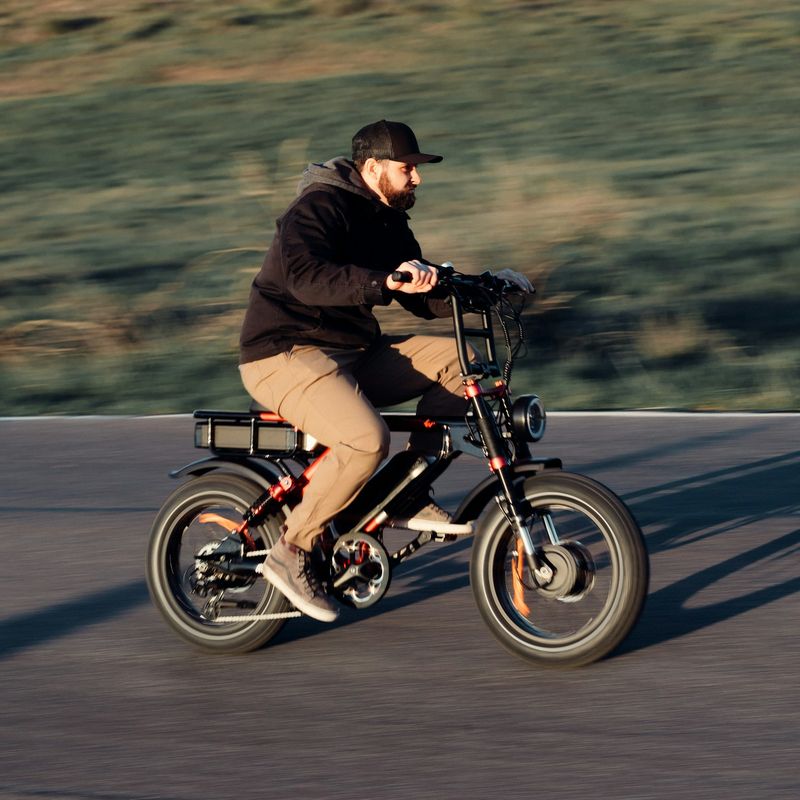
Short answer: in the US, most e-bikes fall into one of three classes. Class 1 helps only while you pedal and stops helping at 20 mph. Class 2 has a throttle that can move the bike without pedaling, also capped at 20 mph. Class 3 helps only while you pedal, but keeps helping up to 28 mph. The class decides where you can ride, so it is worth choosing before you choose a bike.
The three classes at a glance
| Class | How the motor helps | Motor stops helping at | Best for |
|---|---|---|---|
| Class 1 | Pedal assist only: the motor works only while you pedal | 20 mph | The widest access: bike paths and trails where e-bikes are allowed, relaxed commuting, fitness riding |
| Class 2 | Throttle: the motor can move the bike on its own (most also have pedal assist) | 20 mph | Riders who want to get moving without pedaling: stop-and-go traffic, hills from a standstill, riders with knee or joint limits |
| Class 3 | Pedal assist only | 28 mph | Longer, faster road commutes where you want to keep up with traffic |
In all three classes the motor must be rated under 750 watts and the bike must have pedals that work. A bike that goes faster on motor power, has a bigger motor, or has no working pedals is not a “low-speed electric bicycle” and may be treated more like a moped or motorcycle, with registration, a license or insurance.
Class definitions as written in the federal land-agency rules summarized on PeopleForBikes’ “Federal Electric Bike Rulemaking” page, and the federal consumer-product definition in 15 U.S. Code § 2085 (motor under 750 W, fully operable pedals, under 20 mph on motor power alone), both read October 19, 2026.
Why the class matters: where you can ride
- Roads: e-bikes in these classes can generally ride on roads open to cars, like any bicycle.
- Bike paths and trails: this is where the class counts. Many places allow some classes and not others. Always check the local rules before you ride.
- Federal public lands: under the Department of the Interior rules (National Park Service, Bureau of Land Management, Fish and Wildlife Service, Bureau of Reclamation), local land managers decide which non-motorized trails are open to e-bikes and to which classes. Riding on throttle alone for an extended time is not allowed on non-motorized trails, and e-bikes are not allowed in designated Wilderness. These Interior rules do not cover the U.S. Forest Service, which treats e-bikes as motor vehicles.
- State law: every state writes its own e-bike rules. Some set a minimum rider age or helmet rules for certain classes, and some don’t use the three classes at all. PeopleForBikes keeps a state-by-state list; look up your state before you buy.
Public-lands details from the FAQ on PeopleForBikes’ “Federal Electric Bike Rulemaking” page, read October 19, 2026.
How to pick a class
| If you mostly… | Look at |
|---|---|
| Ride bike paths, greenways and trails | Class 1, the class most likely to be allowed |
| Want to move without pedaling sometimes | Class 2 (a throttle), and check your local paths allow it |
| Commute on roads over longer distances | Class 3 for the higher assisted speed |
| Carry kids or cargo | A throttle (Class 2) makes starting from a stop with a heavy load easier; check the bike’s rated load |
| Aren’t sure yet | Some bikes can be set to more than one class. Check that the label matches how you will ride, and don’t modify a bike past its class: that can change its legal status |
What else to check on a listing
- Class label: look for the class, top assisted speed and motor wattage stated by the maker.
- Battery: capacity (watt-hours) is the best single guide to range, but real range depends on assist level, hills, wind, tires and rider weight.
- Battery safety: look for a battery and charging system tested and certified to a recognized safety standard, and charge only with the supplied charger.
- Motor position: hub motors (in a wheel) are simple; mid-drive motors (at the pedals) work through the bike’s gears, which many riders prefer on hills.
- Brakes: e-bikes are heavier and faster than regular bikes, so disc brakes, ideally hydraulic, are worth having.
- Fit and weight: frame size, step-through or step-over, and total weight if you have to carry it up stairs.
- Return terms and service: who repairs it near you, and what the warranty covers on the battery and motor.
Quick checklist before you buy
- Where you will ride: roads, bike paths, trails or public lands
- Local and state rules for each class checked
- Class 1, 2 or 3 chosen to match those places
- Class, top assisted speed and motor wattage on the label
- Battery size for your trips, and a certified battery and charger
- Brakes, frame size and weight right for you
- Helmet and lights
Shop e-bikes and ride gear on Amazon
Check each bike’s class, top assisted speed, motor wattage and battery certification on the listing.
Keep reading
Browse e-bikes, ride gear and scooters, or see what size power station you need for charging on the go.
Disclosure: As an Amazon Associate we earn from qualifying purchases. We also earn commissions from eBay and other retailers' affiliate links. Shop links on this page are affiliate links and are marked sponsored.